Acrylic-based solvent-borne coating paint.
| Image | Article number | Colour | Size | SDS |
|---|---|---|---|---|
 |
55441 | Svart | 1 KG | SDS |
 |
55552 | Specialkulör | 4 KG | SDS |
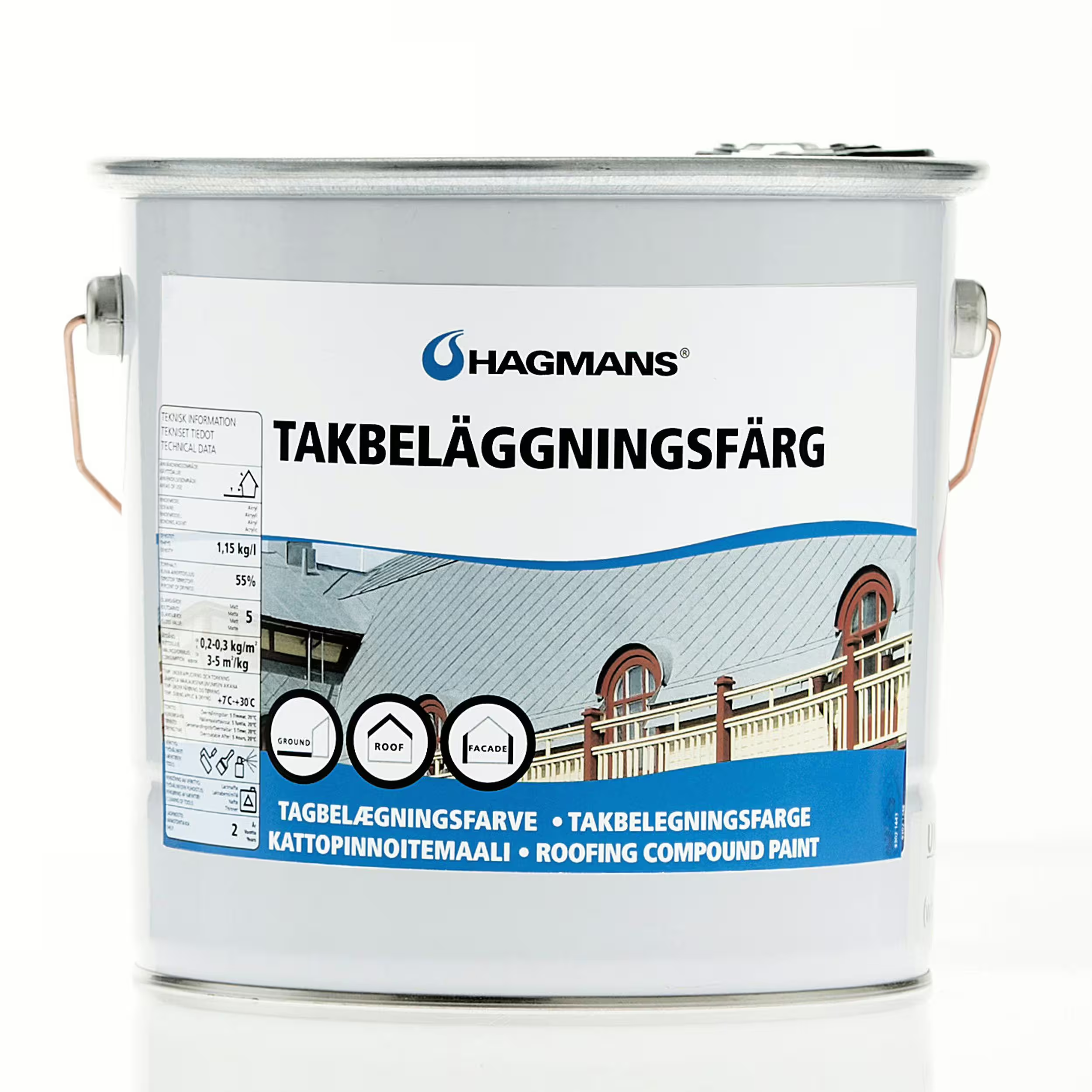 |
55443 | Svart | 4 KG | SDS |
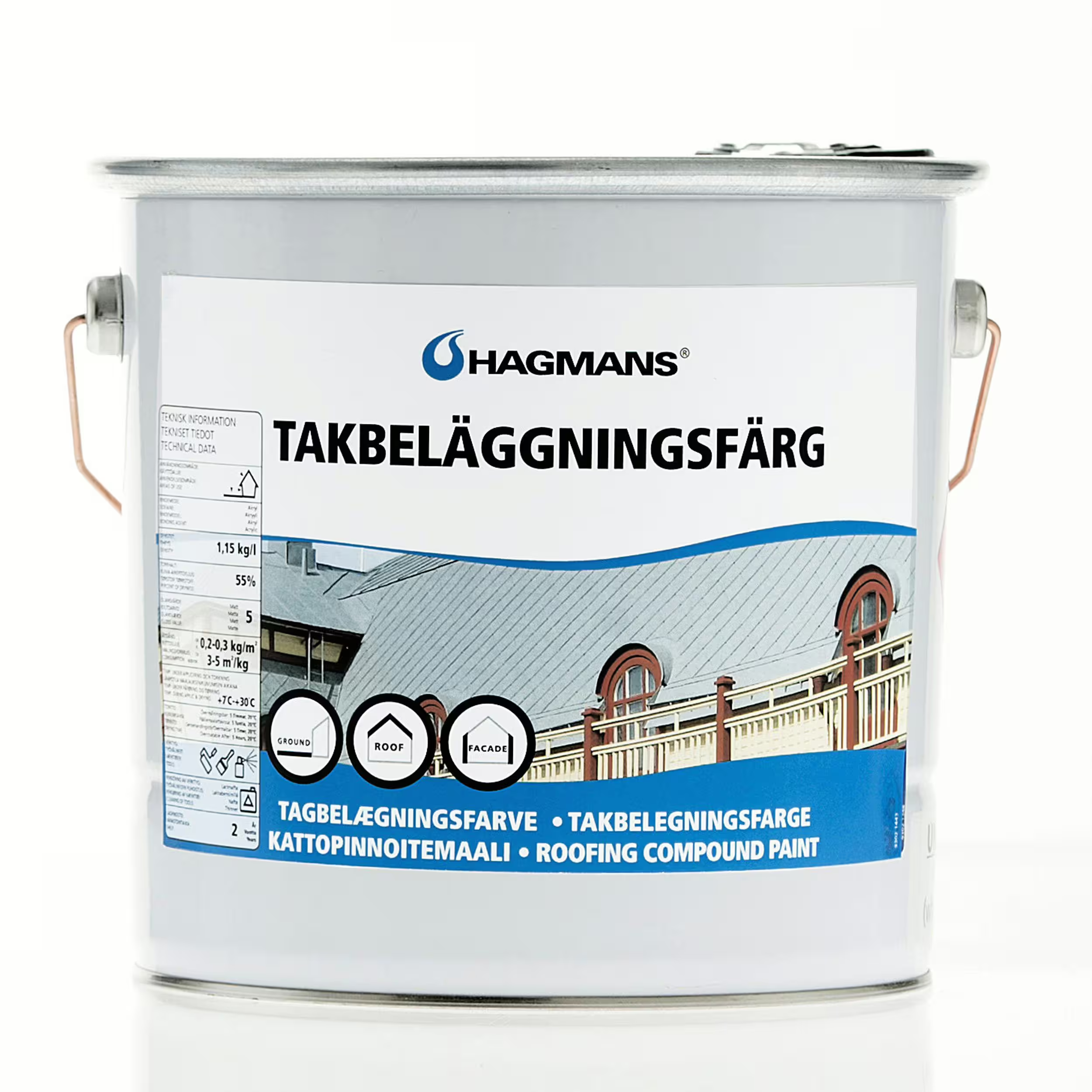 |
55463 | Tegelröd | 4 KG | SDS |
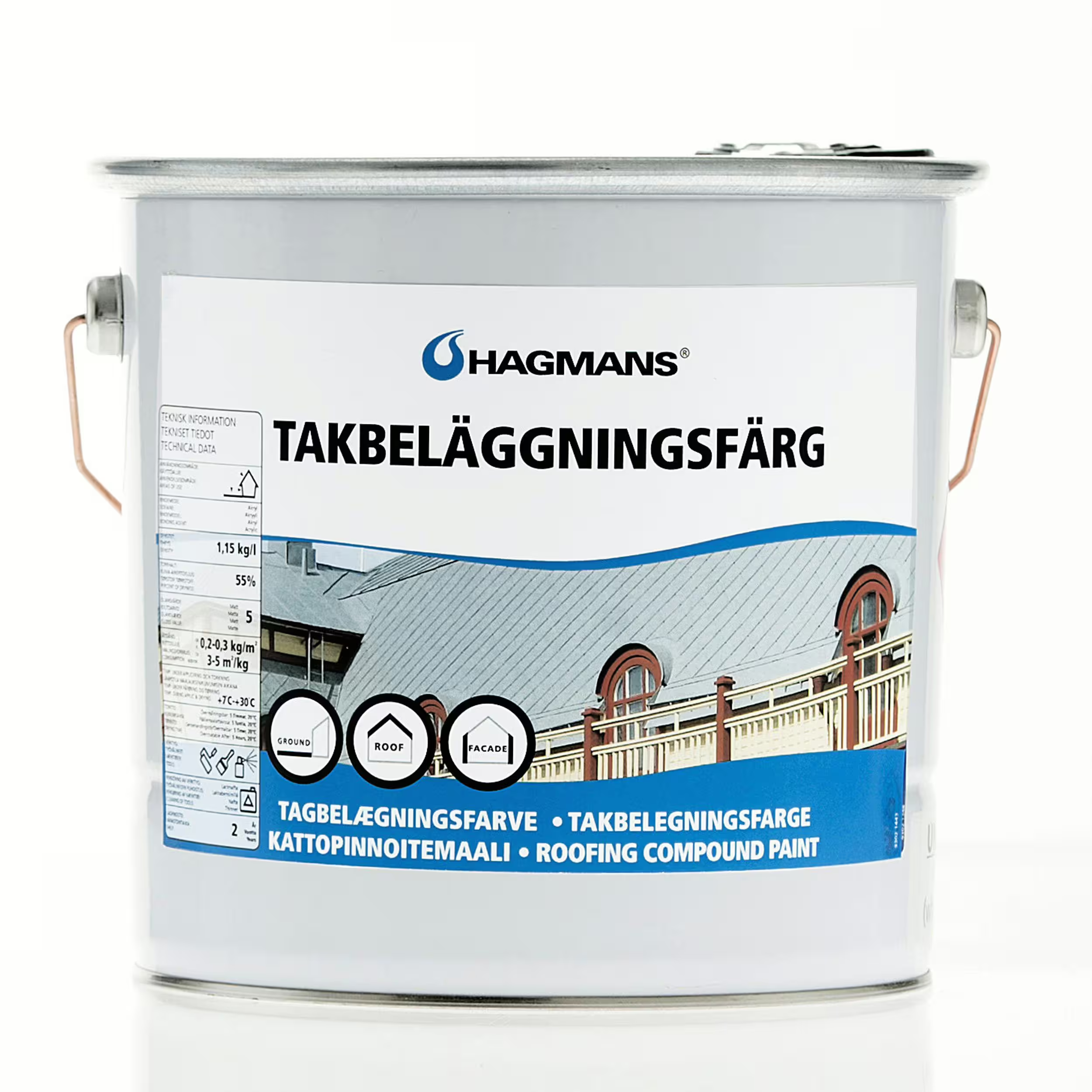 |
55453 | Vit | 4 KG | SDS |
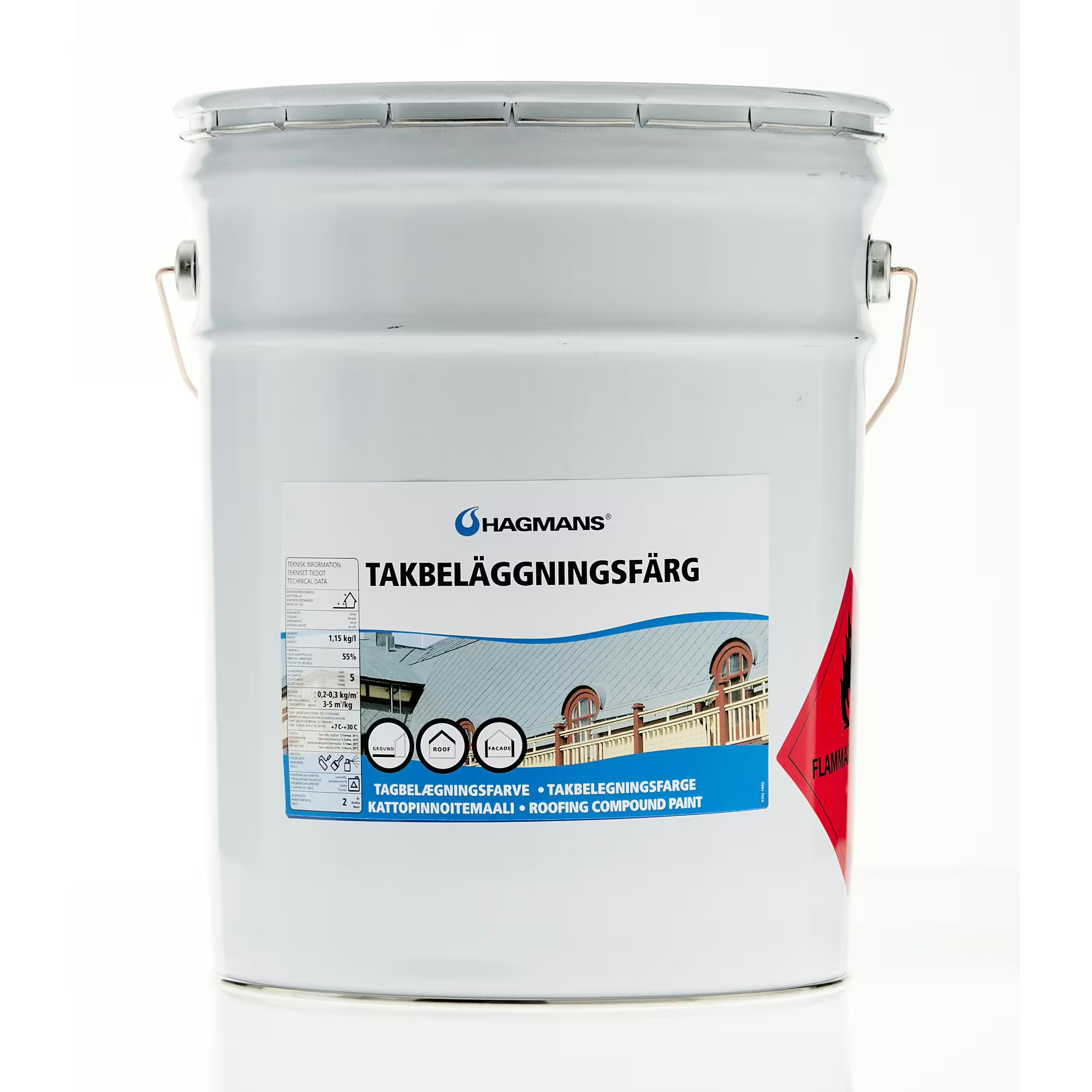 |
55405 | Brun | 20 KG | SDS |
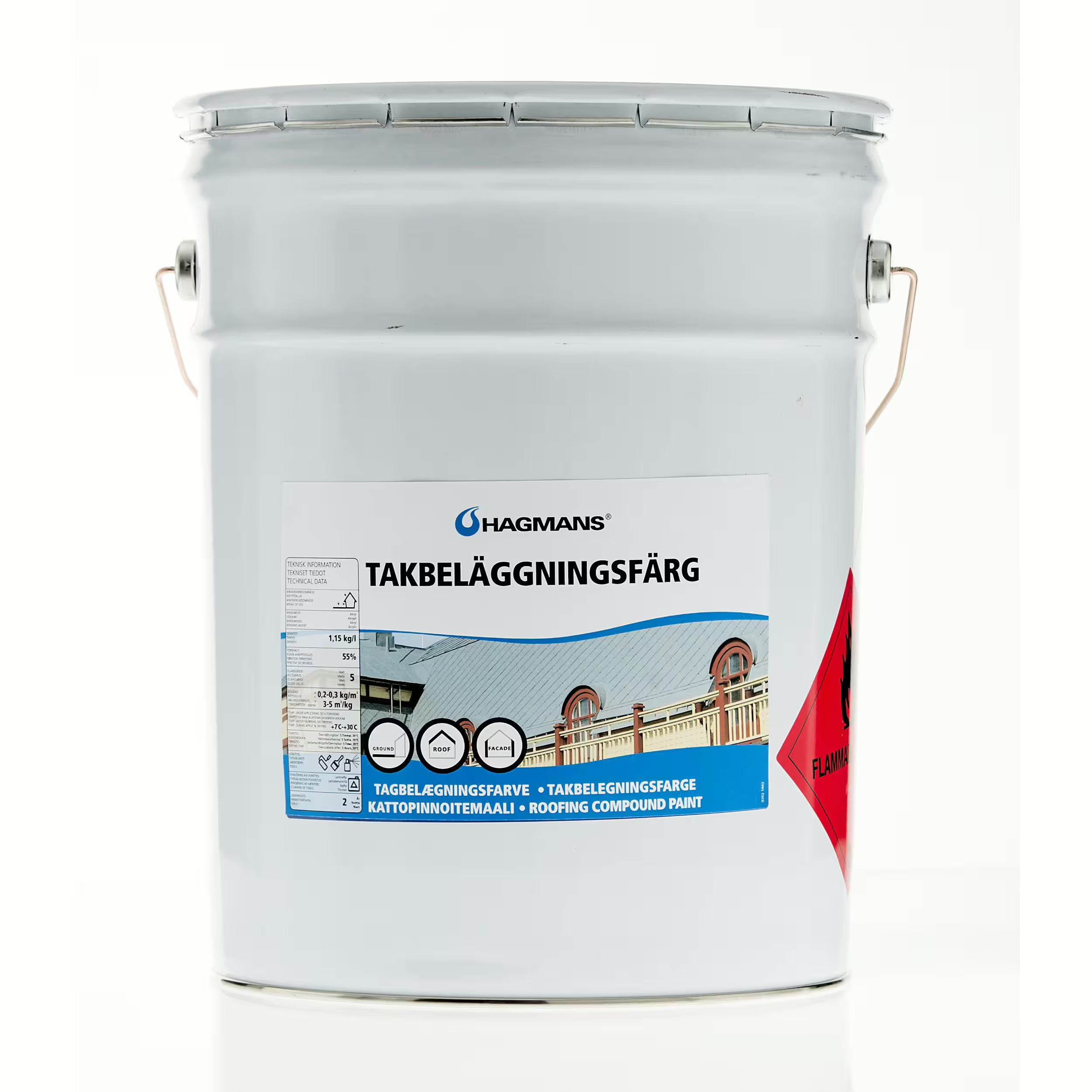 |
55415 | Grå | 20 KG | SDS |
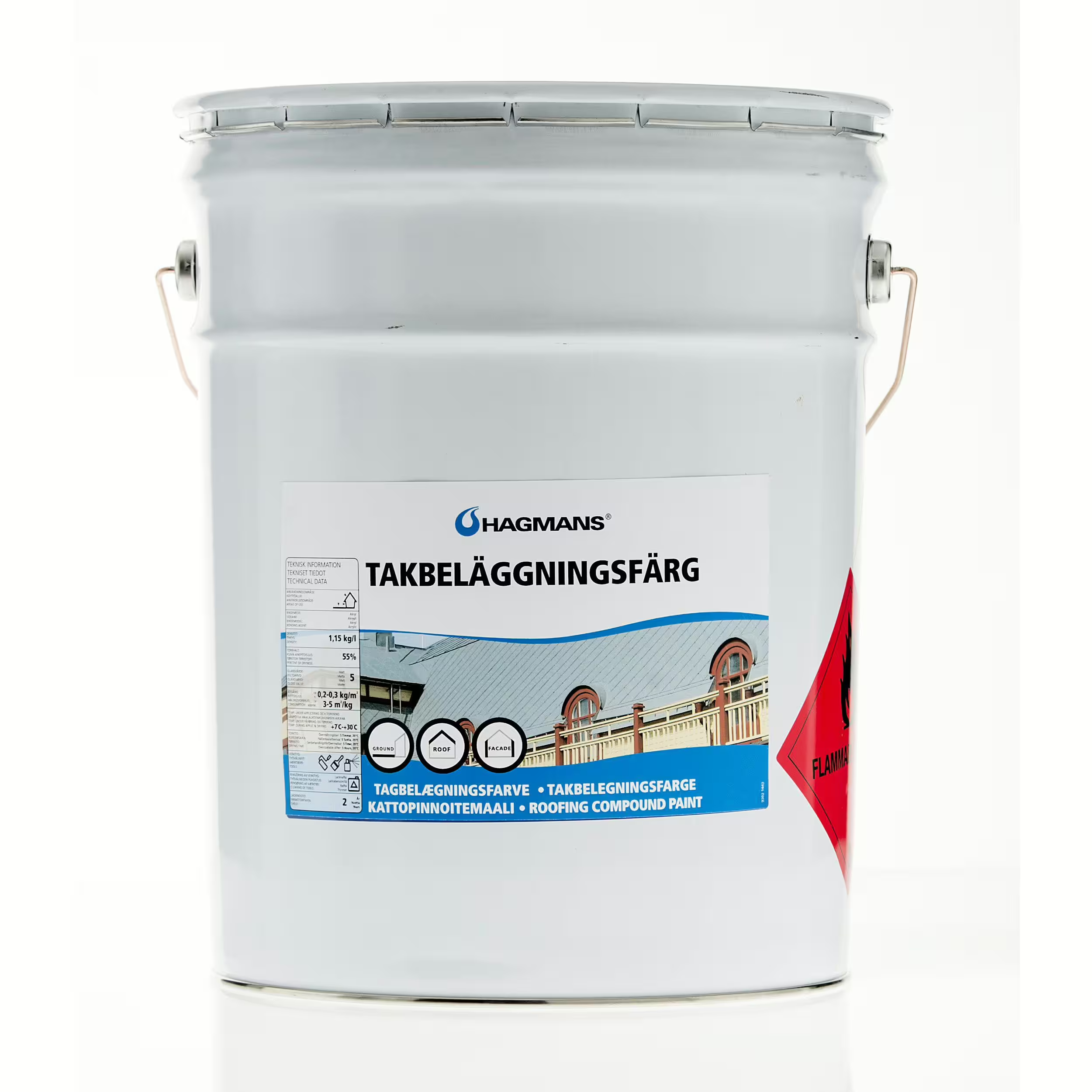 |
55555 | Specialkulör | 20 KG | SDS |
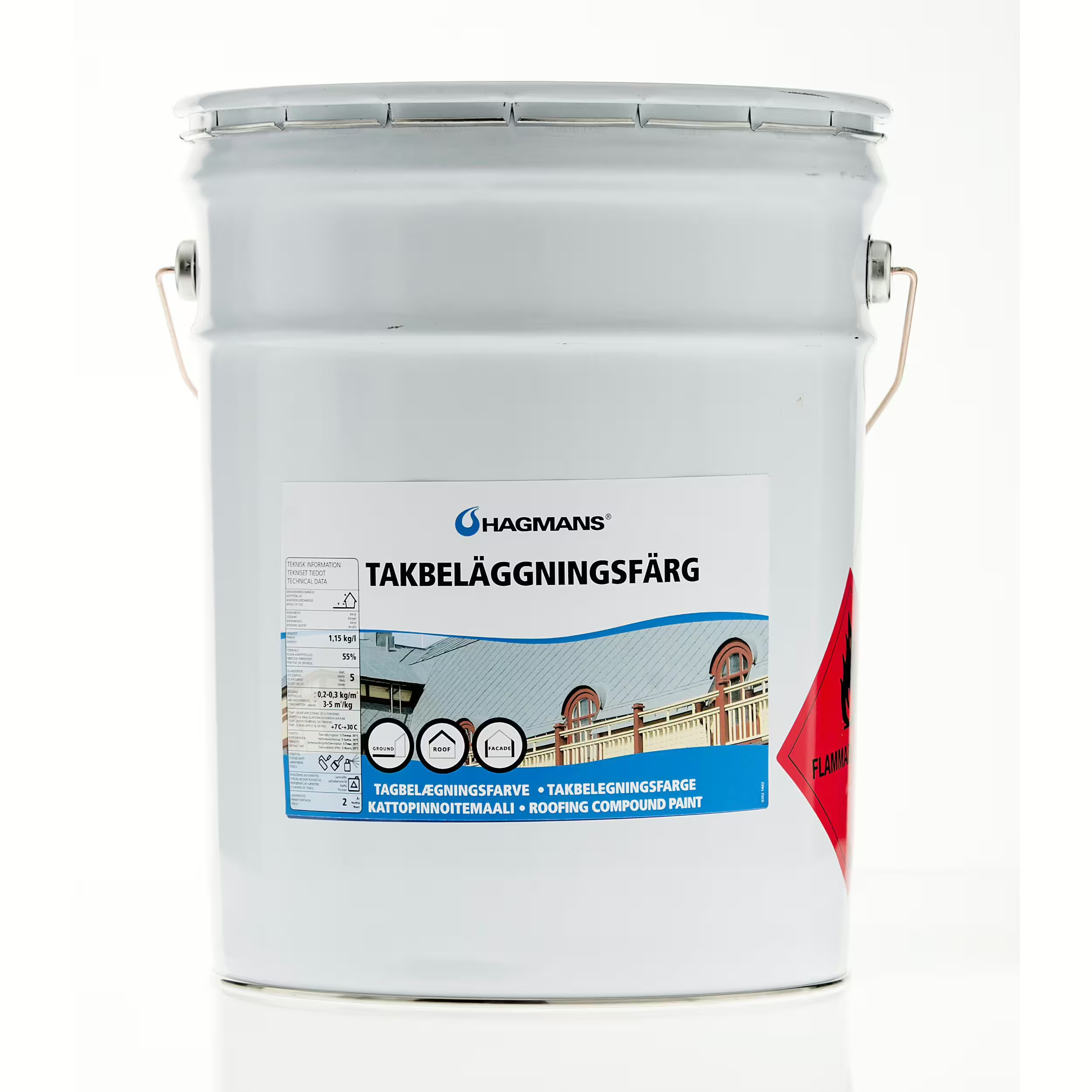 |
55445 | Svart | 20 KG | SDS |
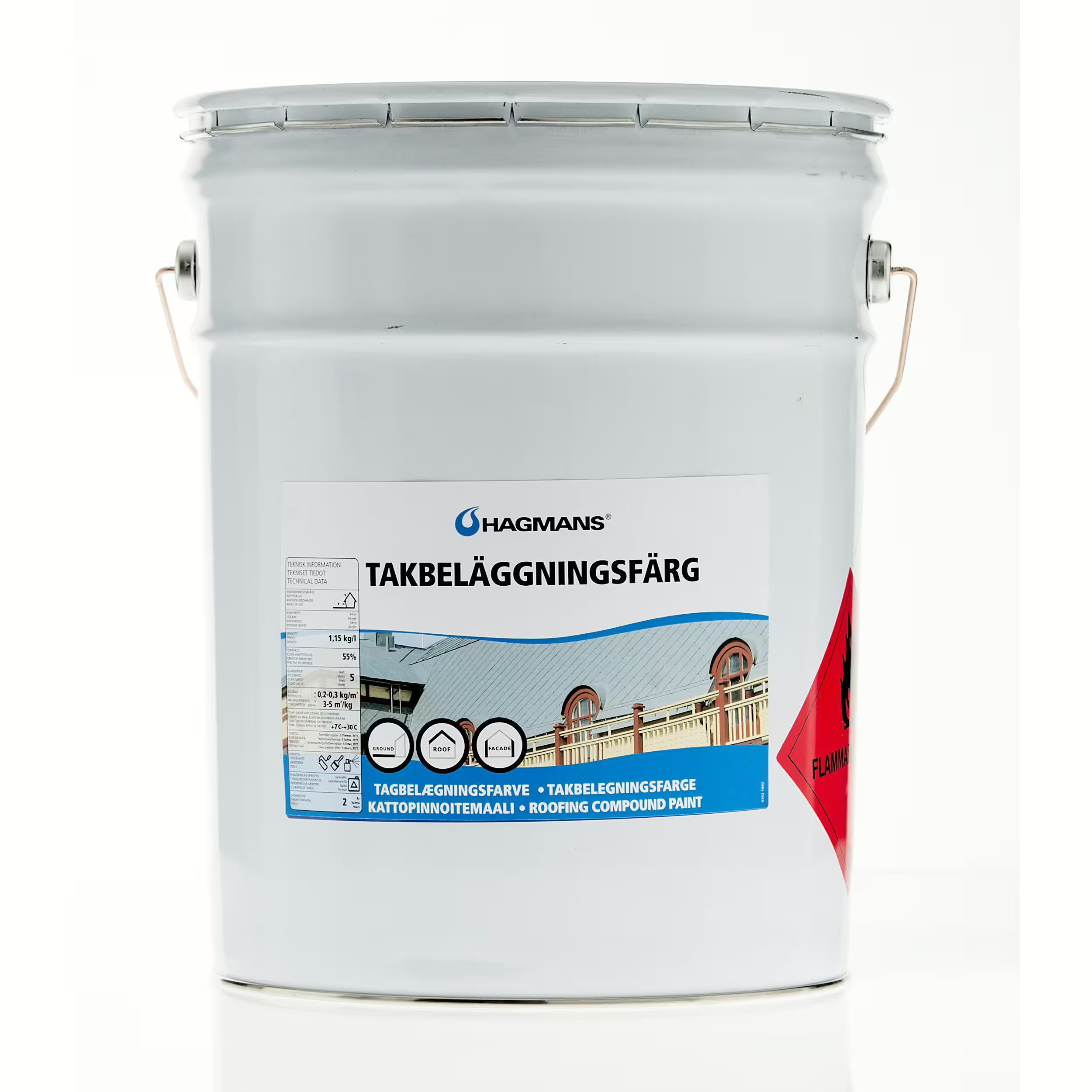 |
55435 | Takgrön | 20 KG | SDS |
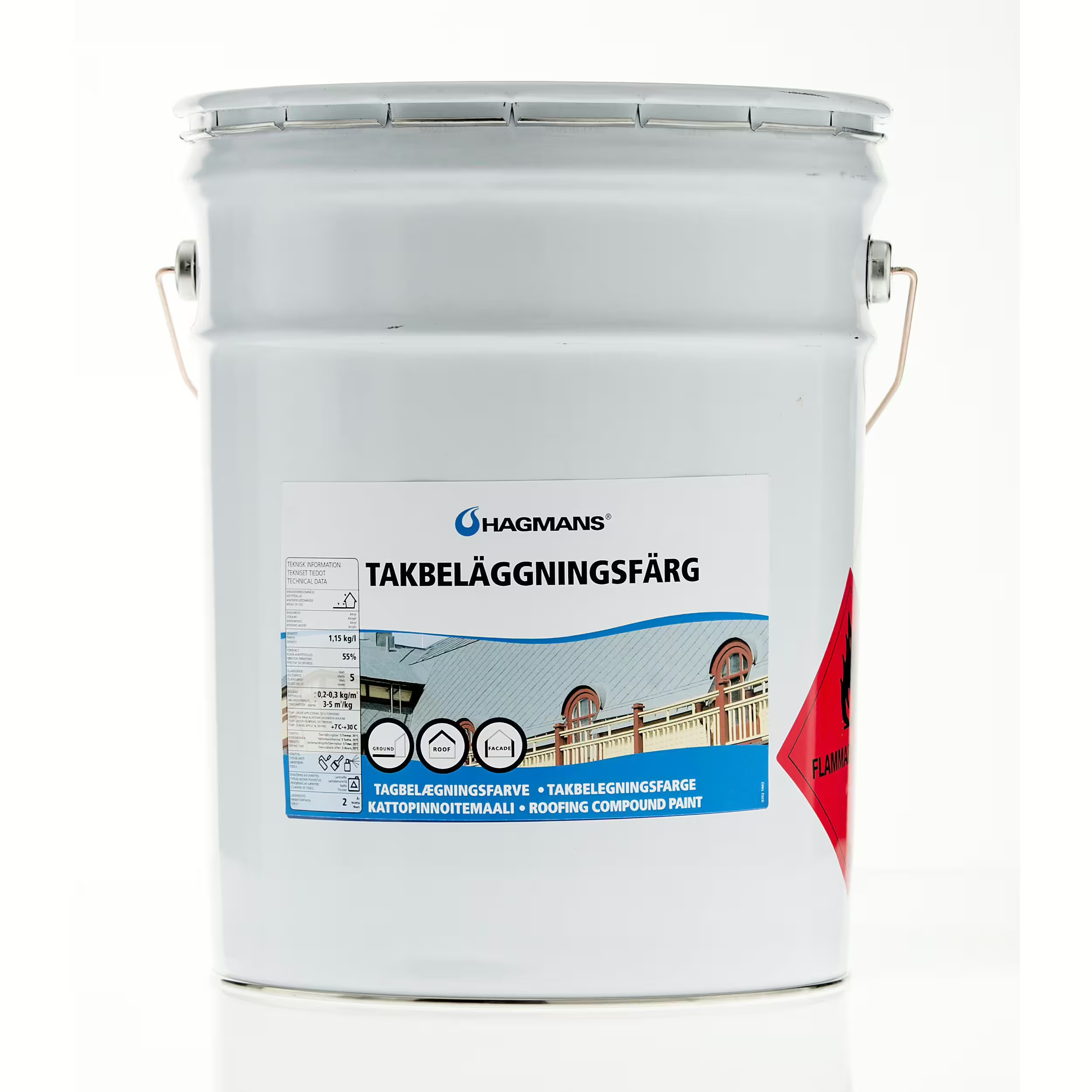 |
55465 | Tegelröd | 20 KG | SDS |
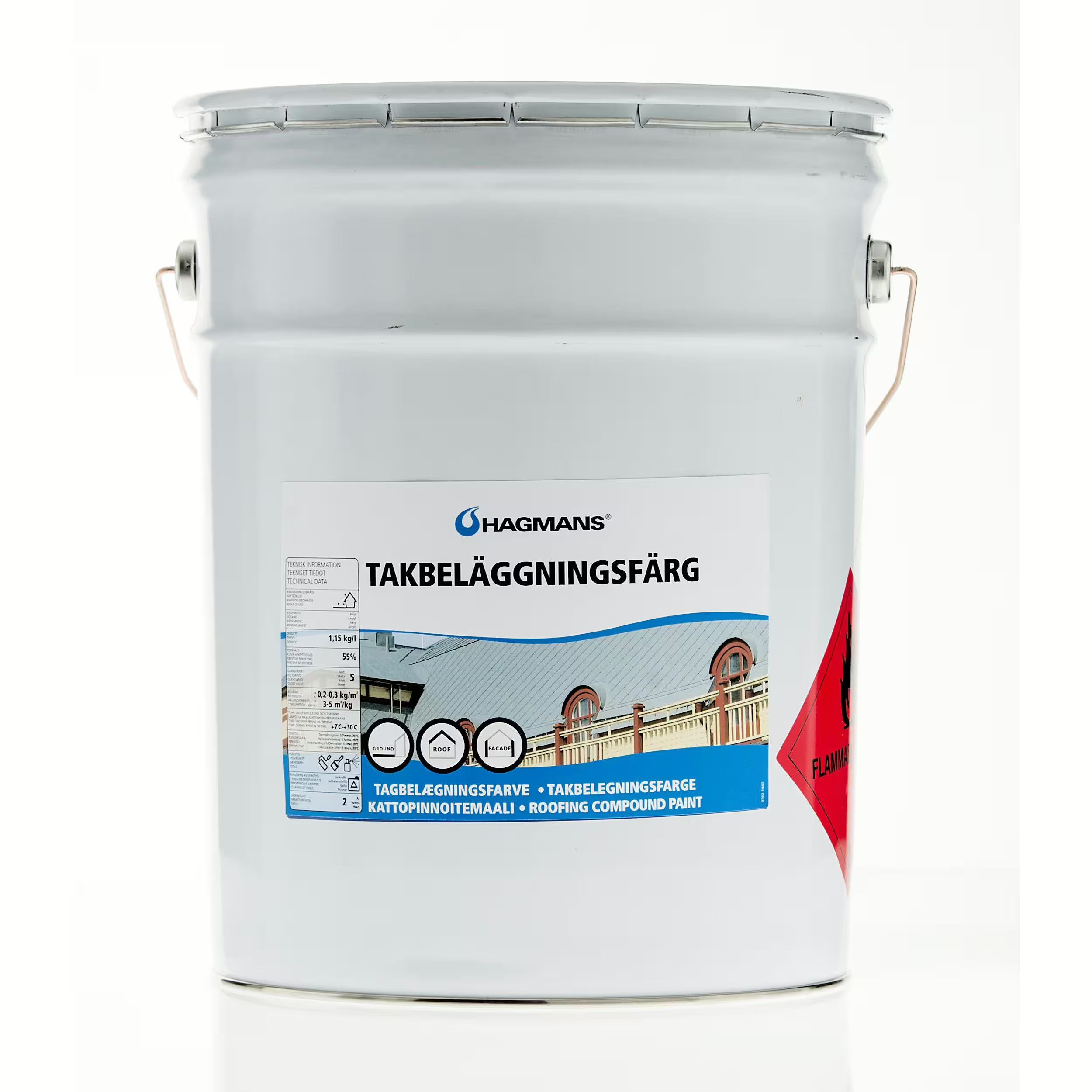 |
55455 | Vit | 20 KG | SDS |
Hagmans
Takbeläggningsfärg
Additional information
Product information
-
Product description
Acrylic-based solvent-borne coating paint. -
Area of application
The product is primarily intended for metal roofs, untreated fiber cement boards (Eternit), and roofing felt. Concrete and asphalt surfaces, such as tennis or inline skating courts, can also be treated with the roof coating paint. (Not suitable for PVF2-type metal)
Technical information
-
Application temperature
From +7°C up to +30°C
-
Density
1.15 kg/l
-
Dilution
1. When applying with brush or roller on absorbent surfaces, dilute 10-20% with varnish naphtha (aromatic content >16%). 2. When spraying, the product should be diluted 15-20% with Hagmans Synthetic Thinner (Xylene). NOTE! Do not dilute on asphalt surfaces.
-
Drying time
At +15°C: Approx. 6 hours.
-
Flammability
Flammable. Fire class 2b.
-
Gloss
Matt
-
Material consumption
Approx. 0.2 kg/m2 for each layer on dense surfaces like metal. Approx. 0.3 kg/m2 for each layer on absorbent surfaces such as cardboard and fiber cement. Coarse surface texture increases material consumption.
-
Volume Solids
About 55% %
Application
-
Instructions for use
Instructions for use: IMPORTANT! Make sure the substrate is
completely dry when you start work. Rain coming
shortly after the treatment does not affect the material's properties
density. However, heavy rain immediately after painting can
affect the surface structure and result in a flaming surface. On
there is a risk of relatively new cardboard roofs/asphalt substrates
bleeding of asphalt. This usually only happens in
first stroke. Cardboard and asphalt surfaces can, however
feel softened up to a week after the treatment.
Test painting should be done on previously treated surfaces
to ensure good adhesion. Two layers are needed
as a rule to obtain an even colour.
If the temperature of the substrate is higher than 40°C,
application and adhesion deteriorate. Pores
or bubbles may appear in the paint film.
Sheet metal roof: Remove all possible rust and loose
sitting suit. Dirt and soot deposits are washed away.
Prime rusty parts with Hagmans Grip On
Primer. If there are cracks or holes in the plate, these can
prepared with Hagmans Epoxy Putty. Apply
the roof coating paint with a brush, roller or
spray e.g. Wagner PS 3.29 and Tempspray H226
with a suitable nozzle.
Fiber cement boards (Eternit): Cracks and holes
repaired and glued together with the help of Hagmans
Epoxy which can be reinforced with reinforcing fabric.
When painting with
The roof coating color of factory-treated eternit
the substrate must be primed with Hagmans
Floor/Ceiling impregnation before painting. Apply
the roof coating paint with a brush, roller or
spray e.g. Wagner PS 3.29 with appropriate
nozzle.
Cardboard roof: Clean the roof from dirt fallout and
possible moss. Any cracks or holes
filled with Latex joint. Through cracks and
holes are reinforced with fiberglass fabric in the joint. Apply
the roofing paint with a brush or roller.
Do not thin on asphalt surfaces. ATTENTION! Cardboard roof
which were previously renovated with roofing material on
asphalt or tar base cannot be treated with
the roofing color.
Other: can Use the same batch number
on a continuous surface.
Documents
We use AI to assist in the translation of product texts. Read more