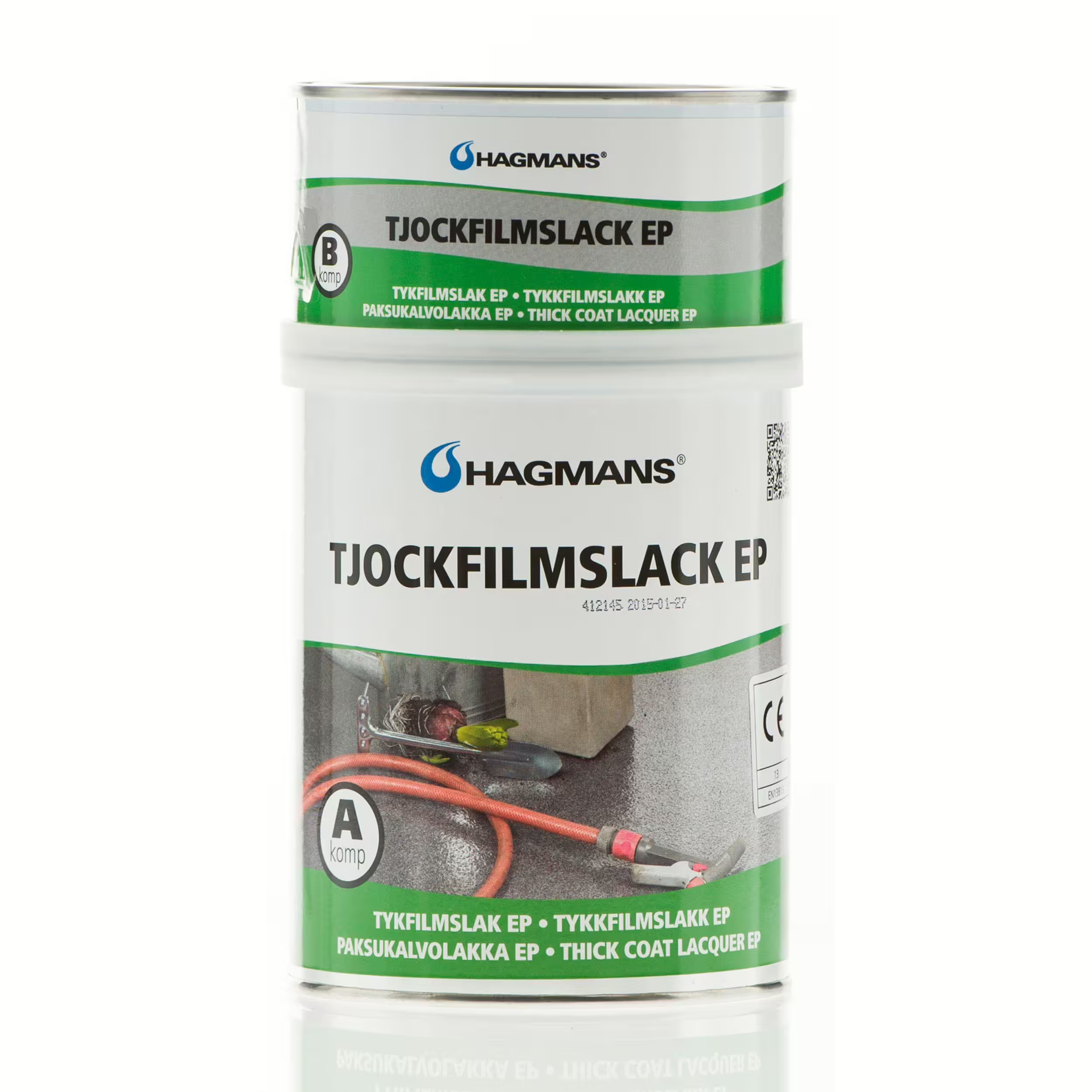
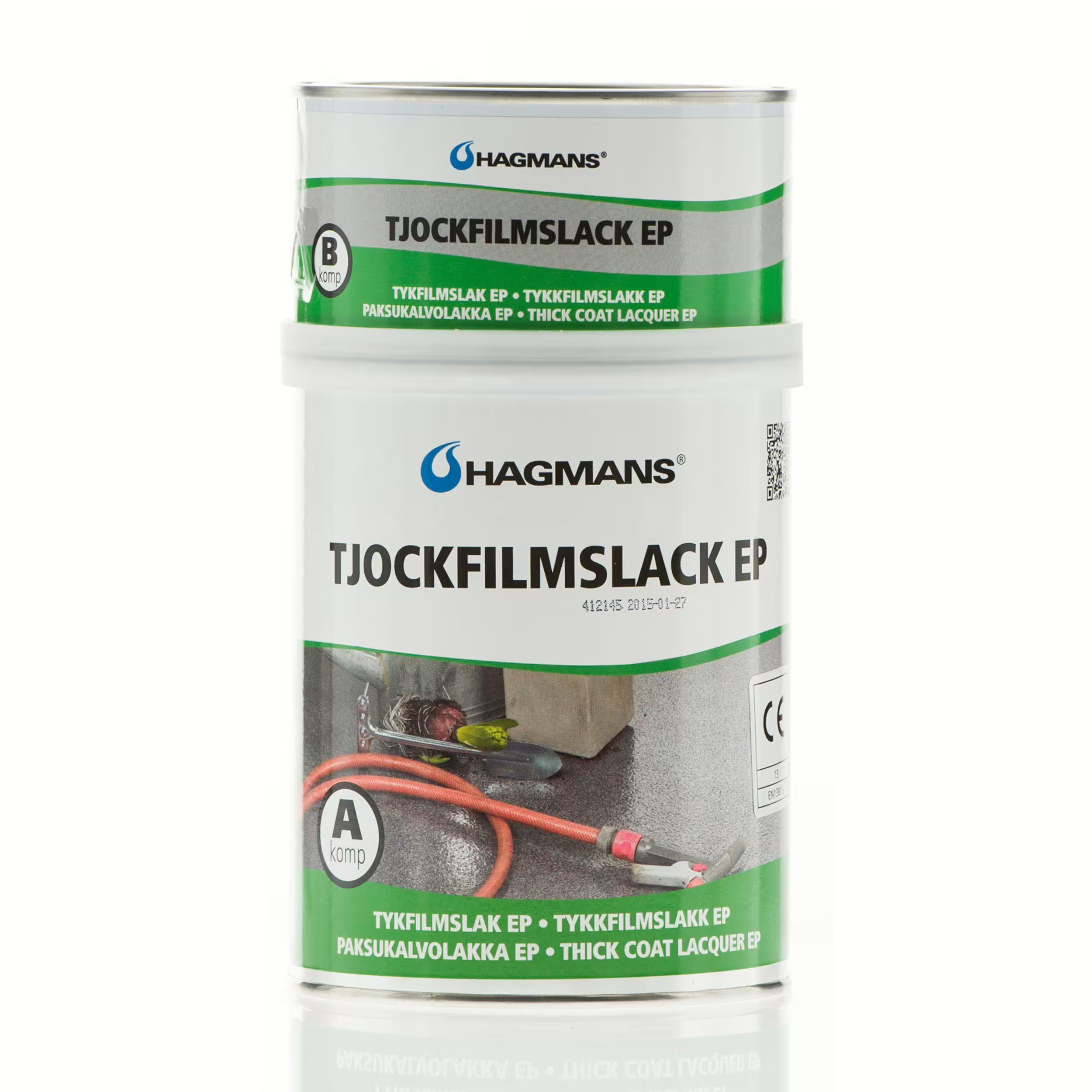
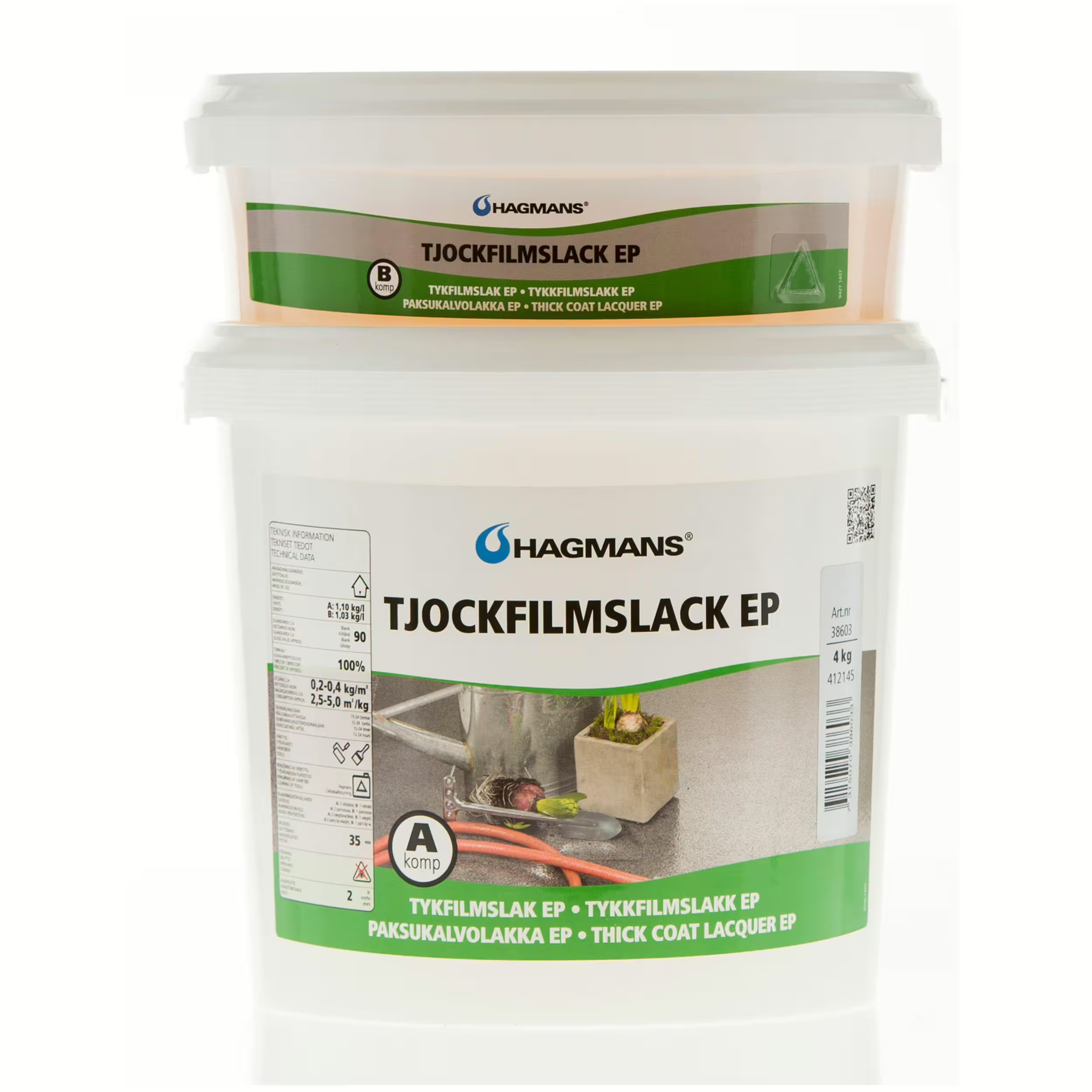
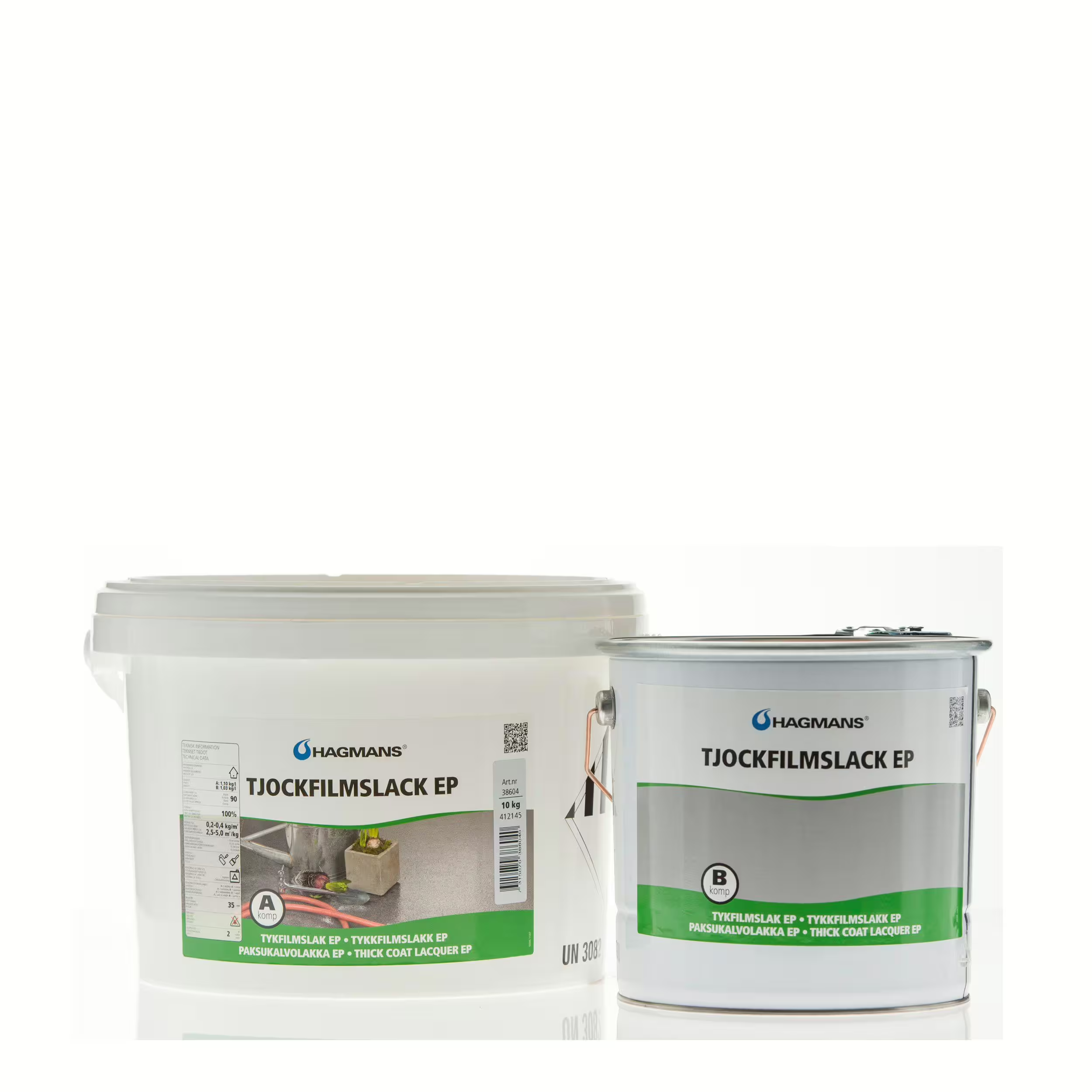
Hagmans Thick Film Varnish EP is a two-component, solvent-free epoxy clear coat.


Hagmans Thick Film Varnish EP is a two-component, solvent-free epoxy clear coat.
Transparent
Component A: 1.10 B-component 1.03 kg/l
At +15°C: EP can be walked on after approximately 15 hours and reaches full wear resistance and chemical resistance after about 7 days. Minimum floor temperature +10°C.
Approx. 90, high gloss
Approx. 0.2 kg/coating on a smooth surface. 1 kg is enough for approx. 5 m². Approx. 0.4 kg/coating on color sand. 1 kg is enough for approx. 2.5 m².
About 35 minutes
2 years
100% %
Mixing ratio:
Comp. A 2 parts by weight
Comp. B 1 part by weight
Thinning: Max. 3% with Cellulose thinner
The surface must be dry and free from dirt, oil, and the like. When topcoating old, existing paint or varnish, the surface should be lightly sanded before treatment. Any loose paint or varnish should be removed, and if necessary, touch-up painting should be done before varnishing. Before varnishing over colored sand, make sure the surface is sanded and thoroughly vacuumed.
With brush or rubber squeegee in combination with a felt roller. To efficiently distribute the lacquer over larger areas, we recommend roughly spreading the lacquer with a double-edged foam rubber squeegee. This type of rubber squeegee has been shown to follow small irregularities in the substrate better than the corresponding model in homogeneous rubber. By quickly roughly spreading the lacquer on the substrate, one avoids heat buildup in the can, which can cause too rapid curing and blistering. The lacquer is then finely distributed with a felt roller. Small amounts, up to about 1 kg, can be mixed by hand with a rectangular stirring rod. Larger amounts should be mixed with an electric or compressed-air-driven machine mixer, e.g., a low-speed drill with a suitable mixing paddle. Splash protection is recommended. Brushes and other equipment are cleaned with cellulose thinner.
We use AI to assist in the translation of product texts. Read more